
Le problème
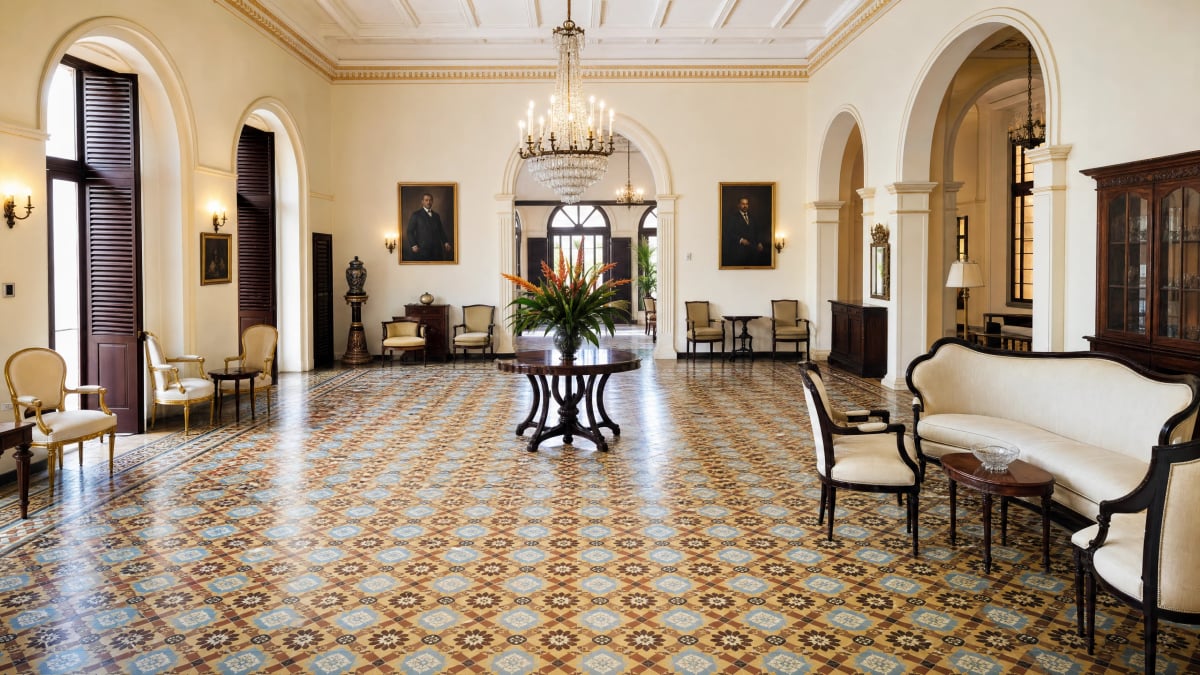
Diplomatic missions and ambassadorial residences require institutional gravity paired with cultural respect — Western luxury aesthetic alone reads as imported, not embedded.
Notre approche
Tilers Ghana coordinates Italian Calacatta, vein-matched book-matched layouts, and culturally-grounded pattern integration to deliver diplomatic-grade interiors that signal both protocol and place.
Tilers Ghana coordinates Italian Calacatta, vein-matched book-matched layouts, and culturally-grounded pattern integration to deliver diplomatic-grade interiors that signal both protocol and place.
The Challenge
Diplomatic and high-protocol interiors occupy a register that ordinary specification cannot reach. An embassy reception hall, a consular waiting suite, a high-commission residence — each of these environments carries the weight of national identity, bilateral relationship, and institutional permanence. The floor, the wall cladding, the threshold detail: every surface is read by visitors whose eye is professionally calibrated to distinguish genuine quality from its approximation.
The challenge is not simply sourcing premium stone or large-format porcelain. It is coordinating material selection, vein-matching logic, pattern sequencing, and installation discipline across a project environment where tolerance for error is effectively zero. A misaligned book-match at the centre of a reception hall communicates incompetence as clearly as a misplaced flag. The specification must be right, and the execution must be faithful to it — without exception.
Ghana’s diplomatic quarter — principally Cantonments and Airport Residential — presents additional complexity: logistics chains for Italian natural stone, humidity management during adhesive cure, and the sequencing demands of secure-site construction protocols. These are not conditions that reward a generalist contractor.
The Tilers Ghana Solution
Since 1976, Tilers Ghana has developed a working methodology specifically suited to high-protocol interior environments. Our approach begins with a formal material audit: reviewing architect and interior designer specifications, confirming material provenance, and modelling the vein-match and layout geometry before a single tile leaves the warehouse. This pre-installation coordination stage is what separates a diplomatic-grade outcome from a competent but ultimately inadequate one.
On site, our specialist installation teams execute to a tolerance discipline drawn from 50 years of institutional practice. Italian Calacatta and Statuario marble installations are managed with dedicated vein-mapping overlays — each slab or large-format tile is sequenced, photographed, and positioned before adhesive is applied. Pattern integration, whether a culturally referenced geometric border or a bespoke medallion inset, is set out by senior installation supervisors whose work spans decades of delivered projects.
The result is a finished interior that reads as a single, considered composition — not as an assembly of components. That distinction is what a Tier-1 diplomatic client requires, and it is what we consistently deliver.
Material + System Specification
- Italian Calacatta and Statuario marble — full book-matched and vein-matched layouts, managed with photographic sequencing overlays prior to installation
- Large-format porcelain panels (1200×2400 mm and above) — precision-cut to specification, installed with zero-joint or feathered-joint finishing to designer instruction
- Bespoke pattern and medallion insets — culturally-grounded geometric and motif integration, set out to architectural drawing and confirmed with client representative before execution
- Specification-grade adhesive and grout systems — matched to substrate, slab weight, and ambient humidity; full manufacturer technical data sheets retained on file
- Threshold and transition details — brass, stainless, or natural stone nosing installed to millimetre tolerance across door openings, level changes, and material interfaces
- Protective sealing and aftercare protocol — natural stone sealed to specification immediately post-installation; written aftercare documentation issued to facilities management
Typical Project Profile
A diplomatic-grade aesthetic engagement typically covers 400 to 2,000 square metres across reception halls, corridors, private offices, and residential suites within a single compound or building. Project timelines range from eight to twenty-four weeks depending on material provenance and secure-site access protocols. Client sectors include high commissions, embassies, consular offices, official residences, and premium hospitality properties operating at an equivalent specification register.
Outcomes
- Reception and public areas that meet the visual and protocol standards expected of Tier-1 diplomatic environments
- Vein-matched and book-matched natural stone installations verified against design intent before, during, and after installation
- Zero-defect threshold delivery — no lippage, no grout variance, no misaligned pattern — confirmed by senior supervisor sign-off
- Durable, sealed surfaces specified for the cleaning regimes and foot-traffic patterns of active diplomatic facilities
- Formal material and installation documentation — including adhesive data sheets, sealing records, and as-installed photography — submitted to client and design team on project close